Showing posts with label epidemic. Show all posts

Thursday, March 29, 2018

New funding (and new hope) for a Lassa virus vaccine

Nearly 2 years ago in 2016, I wrote a post about a deadly virus that was causing a worrying outbreak in Nigeria: the Lassa virus. For the rest of 2016 and 2017, the outbreak lessened in severity, but it was not completely eliminated. Unfortunately, this year has featured a new surge in infections with the virus. In just the first 2 months of 2018, at least 317 people have been infected with Lassa virus, far surpassing the 143 cases confirmed in all of 2017. Additionally, around 20% of those infected in 2018 have died from the infection.

While the reports from March suggest that the current outbreak is slowing, major hurdles for the containment and management of Lassa fever cases still exist. The disease is carried by multimammate rats, which are difficult to keep out of homes and away from human food, especially as populations in Africa grow and the once-empty fields where the rodents live are developed. The long asymptomatic period at the beginning of infection makes it difficult to diagnose and treat effectively. Even once symptoms do manifest, they tend to be mild and non-specific, with 80% of those infected suffering from mild fever, general malaise, and/or headache. Additionally, the sub-optimal treatments have not improved in recent years, and there is still no vaccine.
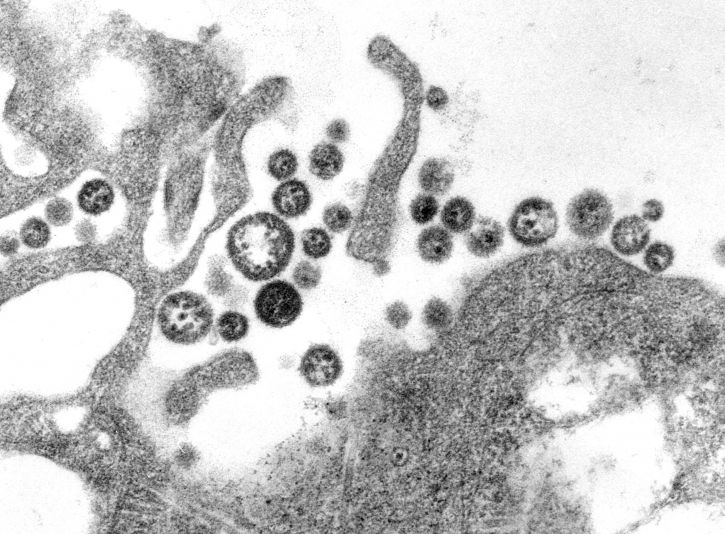
lassa, virus, virions, adjacent, cell, debris, virus, member, virus, family, arenaviridae
Lassa virus particles. CDC's Public Health Image Library.
Image # 8700; photo credit: C.S. Goldsmith.
In an attempt to deal with these issues, the Coalition for Epidemic Preparedness Innovations (CEPI) awarded $37.5 million to Themis Bioscience earlier this month for the development of their Lassa virus vaccine. CEPI was created in the wake of the Ebola epidemic and receives funding from the Wellcome Trust, the Bill & Melinda Gates Foundation, the European Commission, and the governments of Germany, Japan, Norway, Belgium, Canada, and Australia to support the development of vaccines for potential or existing pandemics. While there are many diseases that could fall into this category, the main focus in the next 5 years for the group will be Lassa virus, the Middle East Respiratory Syndrome (MERS) virus, and Nipah virus.

With the funding from CEPI, Themis plans to move into human trials with their Lassa virus vaccine as early as this year. Following the Ebola crisis, the World Health Organization developed a procedure to fast-track the approval of products for use in public health emergencies. The hope is that these procedures could be used in the context of the Lassa virus outbreak to accelerate the development of the Themis vaccine. To further speed development, the Themis Lassa virus vaccine will be based on the measles vaccine vector previously created by the Institut Pasteur, which has already been used effectively in humans. By inserting Lassa virus proteins into this vector, a new vaccine that will prime the body to respond to a Lassa infection will be created. This strategy opens the door to allow for the rapid creation of additional vaccines, as well.

The funding from CEPI will support the preclinical and initial clinical development through a phase 2 trial of the Themis Lassa virus vaccine in order to test its safety and efficacy. The ultimate goal is that the funds will allow the production of a vaccine stockpile that will be ready to test in an outbreak, which may be needed sooner rather than later. While the current outbreak appears to be slowing, and the dry season, when the majority of Lassa fever cases in Nigeria have historically occurred, is coming to an end, a report from Sierra Leone has suggested that the incidence of Lassa fever may actually be higher during the rainy season. This leaves uncertainty about the outlook for the current Lassa fever outbreak. But whether the outbreak continues now or goes dormant for the next 10 years, a vaccine will be a vital weapon in the fight against Lassa virus for the future.


Thursday, June 29, 2017

More vaccination victories needed in the meningitis fight

Vaccinations have been proven time and time again to prevent disease and improve health outcomes. All around the world, vaccines have been deployed to deal with illnesses as common as the flu and as deadly as Ebola. Meningitis is another disease for which vaccination has become a major priority. The “kissing disease,” at it is sometimes called, has made a number of appearances on college campuses across the United States. While incidence in the U.S. remains quite low, at 0.3-4 cases per 100,000 persons, incidence can be as high as 1 case per 100 persons in the “meningitis belt” of Africa, where epidemics occur with regularity.

Image result for neisseria meningitidis
Neisseria meningitidis, the bacterium responsible for meningitis.
Image from Bioquell.com
Infection with the bacterium Neisseria meningitidis, the major cause of meningitis, often goes unnoticed. The bacteria take up residence within the nasal cavity, where they can stay without causing disease in a carrier individual. However, in approximately 1-5% of people exposed to the bacteria, invasive disease occurs, and the bacteria enter the bloodstream, leading to life-threatening disease.

Symptoms of meningitis typically begin almost immediately, just one day after infection, and include flu-like symptoms of fever, headache, and stiffness. Because the bacteria enter the bloodstream, any organ or tissue can become infected and impaired. Despite years of research, mortality rates continue to range from 10-15%, even in developed countries, with rates above 20% in the developing world. Even for those who survive the invasive disease stage, meningitis causes lasting impairments in 19% of patients, with neurological disabilities, seizures, hearing or visual loss, and cognitive impairment being classical manifestations. The rapidity of disease progression, along with the high mortality rate, make meningitis a prime disease target for vaccination.

The first vaccines against meningitis were developed in the 1970s. Unfortunately, these early vaccines lacked the ability to maintain long-lasting immunity against the bacteria. In the late 1990s, alterations were made in the vaccine components, allowing for the elicitation of an immunological memory response that would be effective to protect young children into their adult years and would even help reduce the rates of carriage of the bacteria in the nasal cavity. While this was great news for the prevention of meningitis, challenges still remained. The bacteria that cause disease can belong to any of 6 different serogroups, meaning that immunity to one serogroup will not necessarily provide protection from another. This requires differential targeting of all 6 serogroups to truly prevent disease.

Image result for meningitis vaccine
Image from the Meningitis Vaccine Project
Researchers have addressed this challenge by producing different vaccines for use in specific parts of the world where each serogroup is problematic. In the meningitis belt of Africa, for example, serogroup A has historically been the cause of epidemics. To wipe out these epidemics, a mass vaccination campaign was begun in 2010; the Meningitis Vaccine Project produced and provided vaccines against N. meningitidis serogroup A for over 217 million people in 17 different countries. Thanks to these vaccines, epidemics linked to the serogroup A bacteria have been eliminated.

Unfortunately, when one serogroup is removed, a niche opens up for another. Just last month, the CDC announced that a small epidemic in Liberia had been caused by the N. meningitidis serogroup C bacteria. Nigeria and Niger have also reported outbreaks of this serogroup. Luckily, in the case of Liberia, the country’s response time was extremely rapid. Thanks to the health system improvements made during the Ebola outbreak, Liberia now has a robust case detection and monitoring system. Other countries in the area, however, are not nearly as advanced and could suffer a severe epidemic if serogroup C moves in with force.


Great strides have been made in the fight against meningitis outbreaks. However, the complexity of the group of bacteria responsible for the disease leaves a number of challenges in place that must be overcome. The ideal solution would be the introduction of a vaccine that combined pieces from each bacteria serogroup to produce an immune response in patients that would protect from all six serogroups at the same time. While some quadrivalent vaccines already exist, which provide protection against four of the six serogroups, these vaccines have only been recommended for use in the U.S. for adolescents entering college. Protection from this vaccine only lasts 2-5 years in adults, making it less than ideal for deployment in rural areas where boosting is not a viable option, such as Africa. Advances in vaccine technology may help improve the longevity of protection, making multivalent vaccination a more robust solution to the meningitis problem. Until then, rapid case detection and monitoring capabilities, such as those displayed in Liberia, will be the key to keeping meningitis epidemics in check as they arise. Between vaccine and monitoring advances, meningitis epidemics may one day become a thing of the past. 

Sunday, October 30, 2016

Cholera: Not just a problem on The Oregon Trail

"Sally has died of cholera." This was a common problem in the game The Oregon Trail that many people remember from childhood. Tragically, cholera is still a major public health problem in countries around the world today. Cholera is caused by the bacterium Vibrio cholerae, which is shed in fecal matter from an infected individual and is often transmitted via contamination of water sources. In countries with poor sanitation and a lack of clean water, this can lead to significant and deadly outbreaks.

Fast-forward from the days of the Oregon Trail to present-day Haiti. The country has suffered multiple tragedies in recent years. In 2010, they were rocked with a devastating earthquake; now, in 2016, they suffered the wrath of Hurricane Matthew. In light of these recent disasters, there have been humanitarian efforts from the United Nations and other relief organizations. Unfortunately, in the wake of the U.N.'s help after the 2010 earthquake, Haiti experienced its first cholera outbreak.

Before 2010, the small nation of Haiti had not been exposed to cholera. The citizens had not had the disease, and no immunity to the pathogen existed there. The first case of cholera was reported in mid-October 2010 in the region of the country along the Meille River. The disease quickly became rampant, with a hospital 60 miles away from the first case reporting new cases every 3.5 minutes within just 2 days. Since then, the outbreak has affected nearly 800,000 people and caused more than 9,000 deaths according to the official numbers; however, many experts fear the true impact has been far greater due to poor case reporting.

Flooding and destruction from Hurricane Matthew on October 4, 2016, have done nothing to help the situation. As many Haitians have lost their homes and their sources of fresh water, cholera has been on the rise again. Flooding has led to increases in contaminated waterways, leaving much of the water unsafe for consumption. Within four days of the storm passing through, officials were reporting 62 cases and 13 deaths from cholera.

The issue of how cholera came to be endemic in Haiti has been a topic of heated debate in the past few years. Many have blamed the U.N.'s Nepalese peacekeeping troops for bringing the bacteria with them into the country following the 2010 earthquake. The U.N. has denied any potential responsibility for the outbreak for years, even in the face of lawsuits from families of those who had died. Others hypothesized that increases in the temperature and salinity of the rivers throughout Haiti had allowed bacteria that may have been living in a dormant state in coastal waters to populate these rivers after the earthquake.

Scientific evidence, however, has been on the side of those who blame the U.N.'s peacekeeping troops for the introduction of the disease. Genetic analyses by whole genome sequencing of the bacteria found in Haiti in 2010 showed that this strain was highly similar to the strain found in Nepal in 2010. Additional studies using multiple-locus variable number tandem repeat analysis (aka DNA fingerprinting), a technique that looks at the number of times a DNA sequence is repeated at specific loci in the genome, also suggested a match between the Nepalese and Haitian strains.

On August 18, 2016, after 6 years of denial, the U.N. finally acknowledged that they did play a role in the initial outbreak. Farhan Haq, the deputy spokesman for the U.N. secretary general, said "over the past year, the U.N. has become convinced that it needs to do much more regarding its own involvement in the initial outbreak and the suffering of those affected by cholera...[a] new response will be presented publicly within the next two months."

The latest chapter in this story comes with the announcement on October 24 that the U.N. is working on a plan to spend about $400 million on cholera in Haiti. Roughly $200 million will be spent on cholera elimination efforts, while the other $200 million will be given directly to families or communities affected by the disease. The full details of the plan are expected to be solidified in the coming weeks. However, questions remain over how the money for this plan will materialize. U.N. member states have already expressed discomfort with paying money to directly compensate victims, as this is not within the purview of the normal development work the U.N. is chartered to perform.

While the final details of the U.N.'s action plan remain to be worked out, it looks like Haiti will be receiving some much-needed support to aid in their cholera elimination efforts in the near future. As the country rebuilds after Hurricane Matthew, water sanitation will be a major focus for the nation. With financial support and help from the U.N., experts are hopeful that cholera can be eliminated fairly quickly from Haiti. That would serve as a major beacon of hope for a nation that has borne the brunt of tragedies for too long.

Tuesday, May 31, 2016

Yearly outbreaks of Lassa fever take center stage

The multimammate rat Mastomys natalensis is a common feature of savannas and forests in many portions of Africa. These pesky rats often infiltrate people’s homes and make themselves comfortable indoors, feasting on any available food stores. While doing so, they leave behind urine and fecal matter. This can be the start of a local Lassa fever epidemic.

Lassa virus is a single-stranded RNA virus that is member of the Arenaviridae family, similar to the Ebola and Marburg viruses. The virus is vectored by the multimammate rats of Africa. Lassa virus, named after the town in Nigeria where the first case arose, is endemic in Sierra Leone, Liberia, Guinea, and Nigeria. However, cases can also be picked up by travelers and brought back to their home countries. So far this year, Lassa has been reported in Nigeria (273 cases, 149 deaths), Liberia (38 cases, 15 deaths), Germany (2 cases, 1 death), Sweden (1 case), Togo (2 cases, 1 death), and Benin (71 cases, 23 deaths). Lassa is frequently transmitted from the original infected person to healthcare workers, as the disease is not easy to diagnose and is easily spread through contact with infected blood, tissue, or secretions.

The symptoms of Lassa fever are non-specific and almost non-existent in many cases. 80% of those infected will have mild symptoms of fever, general malaise, and/or headache. In 20% of cases, however, much more severe symptoms can occur. Hemorrhaging, respiratory distress, swelling, and vomiting are associated with severe disease. Additionally, Lassa fever can often lead to various degrees of deafness, which can be permanent; as many as 25% of people who survive the disease will suffer from some form of deafness, even if they only present with mild symptoms.

Treatments for Lassa include antiviral drugs, such as Ribavirin, which show the highest efficacy when given early. However, Lassa symptoms do not usually manifest until 1-3 weeks after exposure to the virus, and diagnosis requires the use of an enzyme-linked immunosorbent serological assay (ELISA), which is not cheap and often not available in the clinics. The small Seattle biotech company Kineta recently won a $7.2 million award to develop a novel antiviral specifically for treating Lassa fever. This could help overcome the logistic challenges of treatment. In the current outbreak in Nigeria, for example, health officials have said that logistics support and delayed case reporting by the states is severely dampening their ability to combat the threat.

The typical Lassa virus transmission season is beginning to wind down this year, and WHO believes that the number of cases is on the decline and that the epidemic will end soon. Others, however, are concerned that the WHO and local governments have not taken the outbreak seriously enough. The outbreak was not officially announced until January of 2016, while cases had begun to occur last August. The public in Nigeria has also raised questions as to whether or not the government has been down-playing the significance of the outbreak. This year’s outbreak has been far more deadly and widespread than others in the past. The mortality rate has approached 50% in Nigeria this year, a massive increase from the more typical 1%. Additionally, Lassa has spread to more states in Nigeria than have ever seen the disease before.

Officials have cited increased awareness of disease as a major reason for the uptick in mortality and spread. In the wake of the Ebola outbreak, more cases of fever and hemorrhage have been reported to the health system, allowing for increased diagnosis of Lassa. But beyond the public health aspects at play, some researchers fear the virus itself may be undergoing changes that are allowing the increase in spread and making it more deadly than before. Only time will tell whether it is just increased vigilance or viral mutations that are the driving forces here. For now, all we know for sure is that sales of rat poison are on the rise as the countries continue to fight and manage this most recent epidemic.