Showing posts with label vaccine. Show all posts

Thursday, March 29, 2018

New funding (and new hope) for a Lassa virus vaccine

Nearly 2 years ago in 2016, I wrote a post about a deadly virus that was causing a worrying outbreak in Nigeria: the Lassa virus. For the rest of 2016 and 2017, the outbreak lessened in severity, but it was not completely eliminated. Unfortunately, this year has featured a new surge in infections with the virus. In just the first 2 months of 2018, at least 317 people have been infected with Lassa virus, far surpassing the 143 cases confirmed in all of 2017. Additionally, around 20% of those infected in 2018 have died from the infection.

While the reports from March suggest that the current outbreak is slowing, major hurdles for the containment and management of Lassa fever cases still exist. The disease is carried by multimammate rats, which are difficult to keep out of homes and away from human food, especially as populations in Africa grow and the once-empty fields where the rodents live are developed. The long asymptomatic period at the beginning of infection makes it difficult to diagnose and treat effectively. Even once symptoms do manifest, they tend to be mild and non-specific, with 80% of those infected suffering from mild fever, general malaise, and/or headache. Additionally, the sub-optimal treatments have not improved in recent years, and there is still no vaccine.
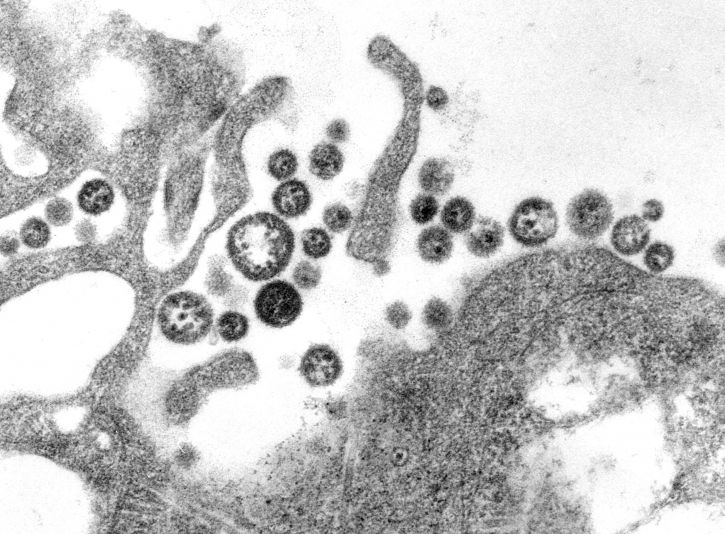
lassa, virus, virions, adjacent, cell, debris, virus, member, virus, family, arenaviridae
Lassa virus particles. CDC's Public Health Image Library.
Image # 8700; photo credit: C.S. Goldsmith.
In an attempt to deal with these issues, the Coalition for Epidemic Preparedness Innovations (CEPI) awarded $37.5 million to Themis Bioscience earlier this month for the development of their Lassa virus vaccine. CEPI was created in the wake of the Ebola epidemic and receives funding from the Wellcome Trust, the Bill & Melinda Gates Foundation, the European Commission, and the governments of Germany, Japan, Norway, Belgium, Canada, and Australia to support the development of vaccines for potential or existing pandemics. While there are many diseases that could fall into this category, the main focus in the next 5 years for the group will be Lassa virus, the Middle East Respiratory Syndrome (MERS) virus, and Nipah virus.

With the funding from CEPI, Themis plans to move into human trials with their Lassa virus vaccine as early as this year. Following the Ebola crisis, the World Health Organization developed a procedure to fast-track the approval of products for use in public health emergencies. The hope is that these procedures could be used in the context of the Lassa virus outbreak to accelerate the development of the Themis vaccine. To further speed development, the Themis Lassa virus vaccine will be based on the measles vaccine vector previously created by the Institut Pasteur, which has already been used effectively in humans. By inserting Lassa virus proteins into this vector, a new vaccine that will prime the body to respond to a Lassa infection will be created. This strategy opens the door to allow for the rapid creation of additional vaccines, as well.

The funding from CEPI will support the preclinical and initial clinical development through a phase 2 trial of the Themis Lassa virus vaccine in order to test its safety and efficacy. The ultimate goal is that the funds will allow the production of a vaccine stockpile that will be ready to test in an outbreak, which may be needed sooner rather than later. While the current outbreak appears to be slowing, and the dry season, when the majority of Lassa fever cases in Nigeria have historically occurred, is coming to an end, a report from Sierra Leone has suggested that the incidence of Lassa fever may actually be higher during the rainy season. This leaves uncertainty about the outlook for the current Lassa fever outbreak. But whether the outbreak continues now or goes dormant for the next 10 years, a vaccine will be a vital weapon in the fight against Lassa virus for the future.

Monday, March 5, 2018

Flu vaccination: Arm yourself against the anti-vax arguement

The flu vaccine. Always a hot topic, especially in years when the vaccine has poor efficacy as it does this year. At times like this, the anti-vax community can gain leverage. So let's take a look at some of the top arguments used in the anti-vax movement and see if we can shed some light on the controversy.


The flu vaccine makes you sick.
People will often say that they got the flu because of the flu shot. This is actually not possible. The flu shot is made with an inactivated, DEAD form of the virus that cannot replicate and transmit. While there can be side effects from the shot that make you feel "sick," this is not the flu. Additionally, the flu vaccine stimulates your immune system, which actually strengthens your ability to fight infections and avoid getting "sick." It is important to note, though, that getting the flu vaccine does not mean you are immediately protected. It typically takes about two weeks to gain the full advantage from the vaccine. People who were already exposed to the virus before receiving the vaccine or who are exposed shortly after vaccination will not be protected.
Image result for flu vaccine
Brian Snyder/Reuters/Landov

The flu vaccine contains mercury that will poison you.
Flu shots that come from a multi-dose vial do typically contain thimerosal, an ethylmercury-based preservative to prevent any bacteria or fungus from contaminating the vaccine. Flu shots that come in prefilled syringes and the nasal flu vaccine do NOT contain this preservative (with the exception of the Fluvirin prefilled syringes from Seqiris, which contain trace amounts of thimerosal). It is important to note the distinction between ethylmercury (found in thimerosal) and methylmercury. Methylmercury is the form of mercury found in foods, like seafood, that is associated with neurological complications. While in vitro studies (in cell culture systems and not in the body) have found little difference between the effects of methyl- and ethylmercury, the story is quite different in vivo (in actual living creatures). Ethylmercury is cleared from the bloodstream significantly more quickly than methylmercury, minimizing the exposure of the body to mercury. Ethylmercury is also compartmentalized by the body more successfully than methylmercury, further limiting exposure. Some may argue that based on the in vitro evidence, ethylmercury is unsafe, but the in vivo data and years of studies have shown that this is not the case. But, if you still want to avoid mercury all together, you can get a prefilled syringe version of the flu shot that contains no thimerosal.

The flu vaccine causes the virus to mutate, becoming more virulent.
This is a popular argument used in the anti-vax community. While that is always a theoretical possibility, there is currently no scientific evidence that this is happening. The influenza virus has an extremely rapid mutation rate, whether you put selective pressure on it or not, so it’s going to be mutating all the time regardless of what we as humans do. This is just the nature of the virus’s replication; the enzyme it uses to replicate its genome makes a lot of mistakes, and the virus is perfectly happy to continue on with those mistakes (aka mutations).

The idea that vaccines create more virulent viruses is typically based on the fact that the use of antibiotics can lead to more pathogenic bacteria, which has been observed. But the vaccine works very differently from an antibiotic. In the case of bacteria, they directly come in contact with and are affected by the antibiotic, which gives bacteria that can survive while in contact a direct advantage. In the case of the vaccine, since it is priming an individual’s immune system and not directly contacting the virus, there is no such direct advantage to the virus. Even if the influenza virus you encounter is different from the vaccine strain, your immune system will be primed and you will have a better chance of successfully clearing the virus. While it is theoretically possible that by vaccinating, you remove the predominant influenza strains, leaving an opening in the environment for a “resistant” strain to fill, most of the highly virulent and dangerous strains have emerged in parts of the world where vaccination rates are very low, so this doesn’t seem to be happening.

Vaccination causes super strains of the flu virus to emerge that are immune to our vaccines. 
Image result for flu vaccine
Influenza virus. Carrington College
People often further argue that our lack of vaccine effectiveness in recent years comes from the emergence of “super” strains of the virus that are “immune” to our vaccines. But the research suggests otherwise. Vaccinemakers use a less-than-ideal system for choosing the vaccine strains that relies on a test using ferrets exposed to the virus. This can lead to incorrect selection and a poor vaccine. Also, improved diagnostic techniques make it more likely for us to capture influenza infection than ever before, so people who would have been diagnosed with some unknown viral disease (and therefore considered “protected”) in the past are now being properly diagnosed as influenza patients. And we are learning that our vaccine production system making the vaccine in eggs leads to its own set of mutations in the vaccine strain that often dampen protection in people. A lot of groups are working to improve the vaccine production pipeline and find alternative ways that don’t involve growing the vaccine in eggs, so that will likely be the way of the future in 5-10 years.

Vaccines cause autism.
This claim is not unique to the flu vaccine and has been spouted at the forefront of the anti-vax community ever since 1998, when Andrew Wakefield and colleagues published a study looking at 12 children that claimed there was a link between the measles-mumps-rubella vaccine and autism. What people in the anti-vax community typically fail to realize is that since that article was published, it has been retracted (the authors themselves admitted their conclusions were inaccurate), Wakefield and colleagues have been found guilty of ethical violations and fraud, and Wakefield has been removed from the UK medical registry. They hand-picked the patients for their study and falsified data to ensure that they would conclude there was a link between vaccines and autism. Additionally, they had received funding from lawyers who had been hired by parents to bring lawsuits against vaccine companies. Since the Wakefield study, many large-scale studies have been performed to see if their initial findings could be confirmed in spite of the ethical issues with the study, but no corroborating evidence has been found. The link between vaccination and autism is based on fabricated data and has no true scientific merit.


In spite of the potentially poor efficacy, healthcare providers will still push for vaccination. Any protection is better than none, especially if you are in contact with the populations at high-risk of dying from infection, i.e. the elderly, babies, and immuno-compromised individuals. The more people who are protected (even if the protection is sub-optimal), the less likely it is for the virus to come in contact with these highly susceptible individuals, and healthcare providers rely on this to keep patients safe. The bottom line is we may have a sub-optimal vaccine, but a lot of people are actively working on that, any protection is still better than none, and there is no evidence that getting the vaccine has any negative impacts on the pool of viruses we are exposed to. So please do not be discouraged, and use your new flu vaccine knowledge to help educate others!

Thursday, June 29, 2017

More vaccination victories needed in the meningitis fight

Vaccinations have been proven time and time again to prevent disease and improve health outcomes. All around the world, vaccines have been deployed to deal with illnesses as common as the flu and as deadly as Ebola. Meningitis is another disease for which vaccination has become a major priority. The “kissing disease,” at it is sometimes called, has made a number of appearances on college campuses across the United States. While incidence in the U.S. remains quite low, at 0.3-4 cases per 100,000 persons, incidence can be as high as 1 case per 100 persons in the “meningitis belt” of Africa, where epidemics occur with regularity.

Image result for neisseria meningitidis
Neisseria meningitidis, the bacterium responsible for meningitis.
Image from Bioquell.com
Infection with the bacterium Neisseria meningitidis, the major cause of meningitis, often goes unnoticed. The bacteria take up residence within the nasal cavity, where they can stay without causing disease in a carrier individual. However, in approximately 1-5% of people exposed to the bacteria, invasive disease occurs, and the bacteria enter the bloodstream, leading to life-threatening disease.

Symptoms of meningitis typically begin almost immediately, just one day after infection, and include flu-like symptoms of fever, headache, and stiffness. Because the bacteria enter the bloodstream, any organ or tissue can become infected and impaired. Despite years of research, mortality rates continue to range from 10-15%, even in developed countries, with rates above 20% in the developing world. Even for those who survive the invasive disease stage, meningitis causes lasting impairments in 19% of patients, with neurological disabilities, seizures, hearing or visual loss, and cognitive impairment being classical manifestations. The rapidity of disease progression, along with the high mortality rate, make meningitis a prime disease target for vaccination.

The first vaccines against meningitis were developed in the 1970s. Unfortunately, these early vaccines lacked the ability to maintain long-lasting immunity against the bacteria. In the late 1990s, alterations were made in the vaccine components, allowing for the elicitation of an immunological memory response that would be effective to protect young children into their adult years and would even help reduce the rates of carriage of the bacteria in the nasal cavity. While this was great news for the prevention of meningitis, challenges still remained. The bacteria that cause disease can belong to any of 6 different serogroups, meaning that immunity to one serogroup will not necessarily provide protection from another. This requires differential targeting of all 6 serogroups to truly prevent disease.

Image result for meningitis vaccine
Image from the Meningitis Vaccine Project
Researchers have addressed this challenge by producing different vaccines for use in specific parts of the world where each serogroup is problematic. In the meningitis belt of Africa, for example, serogroup A has historically been the cause of epidemics. To wipe out these epidemics, a mass vaccination campaign was begun in 2010; the Meningitis Vaccine Project produced and provided vaccines against N. meningitidis serogroup A for over 217 million people in 17 different countries. Thanks to these vaccines, epidemics linked to the serogroup A bacteria have been eliminated.

Unfortunately, when one serogroup is removed, a niche opens up for another. Just last month, the CDC announced that a small epidemic in Liberia had been caused by the N. meningitidis serogroup C bacteria. Nigeria and Niger have also reported outbreaks of this serogroup. Luckily, in the case of Liberia, the country’s response time was extremely rapid. Thanks to the health system improvements made during the Ebola outbreak, Liberia now has a robust case detection and monitoring system. Other countries in the area, however, are not nearly as advanced and could suffer a severe epidemic if serogroup C moves in with force.


Great strides have been made in the fight against meningitis outbreaks. However, the complexity of the group of bacteria responsible for the disease leaves a number of challenges in place that must be overcome. The ideal solution would be the introduction of a vaccine that combined pieces from each bacteria serogroup to produce an immune response in patients that would protect from all six serogroups at the same time. While some quadrivalent vaccines already exist, which provide protection against four of the six serogroups, these vaccines have only been recommended for use in the U.S. for adolescents entering college. Protection from this vaccine only lasts 2-5 years in adults, making it less than ideal for deployment in rural areas where boosting is not a viable option, such as Africa. Advances in vaccine technology may help improve the longevity of protection, making multivalent vaccination a more robust solution to the meningitis problem. Until then, rapid case detection and monitoring capabilities, such as those displayed in Liberia, will be the key to keeping meningitis epidemics in check as they arise. Between vaccine and monitoring advances, meningitis epidemics may one day become a thing of the past. 

Wednesday, February 15, 2017

Killing two birds with one stone: A new vaccine to fight rabies and MERS-Cov

In 2003, the world was faced with a serious biological threat. The severe acute respiratory syndrome (SARS) virus hit the scene in China and quickly spread to 28 countries across the globe. The reason for the rapid and global spread lay in the very nature of the virus' infection. It can be spread by close person-to-person contact through respiratory droplets produced when an infected person sneezes or coughs, and the initial symptoms of disease are very non-specific. This allowed the virus to easily be carried via international travel throughout the world. While the number of cases quickly rose to a total of 8,098 within 6 months, the global response was also rapid. The World Health Organization quickly activated their global alert system and began aiding countries in identifying and quarantining those infected and at risk. Thanks to this global response, SARS was quickly handled. However, this virus showed the world how at-risk we are to respiratory viruses in an age of increasing global travel.

Since the 2003 SARS outbreak, scientists have been on the look-out for the SARS virus and other related viruses in an attempt to minimize outbreaks. These viruses are part of a family known as Coronaviridae, specifically the coronavirus sub-section of this family (a typical virion is shown to the right). They are single-stranded, positive sense RNA viruses, which means that as soon as the virus invades a host cell, it can begin making its own proteins and progeny immediately without the need for time for replication or transcription of the genetic material. The coronaviruses that cause respiratory syndromes infect the cells of the lungs, leading to severe and sometimes deadly pneumonia.

In 2012, a novel coronavirus was identified in Saudi Arabia; it was named the Middle East Respiratory Syndrome Coronavirus (MERS-CoV). It quickly spread to the United Kingdom through travel. While the MERS-CoV has never caused an outbreak as large as that of the SARS virus, it has also not been contained as successfully. MERS-CoV outbreaks have continued to pop up from 2012 to now, with the most recent outbreak update coming just last week from Saudi Arabia. The MERS-CoV outbreaks have caused a total of 1,905 confirmed cases in 27 countries, with 677 deaths. The severe pneumonia caused by MERS-coV is more deadly than that caused by SARS and other coronoviruses, leading to the alarmingly high 37% death rate.

There are currently no vaccines and no treatments for MERS-CoV. Quarantining those infected and using additional precautions when treating these patients have been the only successful preventative measures to reduce spread. The biggest problem for complete elimination of this virus is that, unlike the SARS virus, the MERS-CoV can also infect an animal that has frequent contact with humans: camels. In many parts of the globe, camels are essential for transportation and play a pivotal role in the economy. Since camels have been shown to be a reservoir for the MERS-CoV, and people in these regions need to continue to have close contact with these animals, the virus has an easy route to re-enter the human population even with the implementation of the same control measures that were so successful with the SARS virus.

The MERS-CoV can be spread from camels to humans in many ways.
Recent work has focused on elimination of virus from the camel population as a course of action to reduce human infections. Starting with a rabies vaccine, which has long been given to animals and is well-tolerated, a group in the United States has shown that immunity to both rabies and MERS-CoV can be achieved in mice. In order to do this, they took a piece of the MERS-CoV spike protein and fused it to the rabies G protein. This allowed a portion of the MERS-CoV to be incorporated into the rabies virus vaccine particles for delivery to the mice. After receiving the immunization, mice were challenged with the MERS-CoV and were found to be protected from infection. The researchers also found high levels of neutralizing antibodies against both MERS-CoV and the rabies virus in the blood of the mice.

While this vaccine candidate is still in the early stages of development, the successful use of the previously tested and approved rabies vaccine as a backbone may provide a way to shorten the timeline to implementation of the vaccine for animals on a larger scale. This could provide a way to start to eliminate the MERS-CoV reservoir and begin to reduce outbreaks in people across the globe. While other research groups are still searching for human vaccination and treatment strategies that will greatly improve our ability to decrease disease severity and save lives, dealing with this large camel reservoir will be an essential step before disease elimination and eradication can truly be considered.

Friday, January 27, 2017

Measles on The Oregon Trail and now

"John has measles." Our journey along The Oregon Trail wraps up with a member of our party falling ill with the measles virus. This leads to the stereotypical measles rash, along with fever and coughing. The mortality rate from measles tends to be low in developed countries, but in places of poverty and food shortages, the mortality rate can be as high as 28%. One of the biggest problems with measles is that it is highly contagious and can be spread through the air. There is also no treatment for this disease, leaving disease prevention as the best strategy for dealing with the measles.

While the march towards the eradication of measles has been well underway for many years, cases have begun to rise in number again recently. Just this week, an outbreak occurred in Los Angeles County, infecting 20 people so far. A vaccine for measles was developed in the 1960's, leading to a sharp decline in the number of cases in the U.S. almost immediately in the late 1960's. Global efforts to increase vaccination have been funded by the American Red Cross, the United Nations, the Centers for Disease Control, UNICEF, and the World Health Organization. The measles vaccine has also been improved over the years to provide better immunity to those vaccinated, giving us the MMR (measles-mumps-rubella) vaccine of today. Thanks to these efforts, measles deaths worldwide had decreased to just 164,000 in 2008.

Unfortunately, in 1998 a paper was written by Wakefield, et al. in The Lancet, showing a link between the MMR vaccine and autism. Although this paper was retracted by 10 of the 12 authors in 2004 and completely retracted by The Lancet in 2010, the publicity this paper received raised doubts for many parents about the safety of the vaccine for their children. Many people may still be unaware that in 2011, the authors of the paper were found guilty of deliberate fraud, which they had committed by picking and choosing what data to include in the paper. As a result, Andrew Wakefield, the lead author of the paper, had his United Kingdom medical license revoked. Even with the retraction and the slew of studies that followed, showing repeatedly no link between the vaccine and autism, parents have continued to voice concerns about vaccinating their children.

For a vaccine to eliminate disease, 100% vaccination is not essential. In vaccination there is a concept known as herd immunity, which has been defined as "the resistance to the spread of a contagious disease within a population that results if a sufficiently high proportion of individuals are immune to the disease." When a high percentage of the population is immune, the virus cannot be introduced or spread well because it will encounter too many hosts that are not susceptible to infection. For herd immunity to work for the measles, generally about 95% of the population needs to be vaccinated and immune. There have long been religious organizations that have opposed vaccination, as well as immunocompromised individuals who were not eligible for vaccination. Even with these small groups of people, high enough vaccination rates were reached to achieve herd immunity in many countries. Unfortunately, the recent increases in the number of parents actively choosing to not vaccinate their children due to fears of autism or other complications and the number of parents who simply do not see the benefit of vaccination and opt out has led to a decrease in the vaccination levels. This has made herd immunity much less effective, allowing cases of measles to increase again.

While the scientific community has repeatedly performed studies to test the safety of vaccines and found that there is no link between the MMR vaccine and autism, the negative publicity from the Wakefield, et al. paper has severely damaged the reputation of this vaccine. Re-educating the public about the safety and necessity of this, and other, vaccines has become a major priority in the wake of the number of measles outbreaks in Europe and the U.S. in recent years. With no treatment for measles, the MMR vaccine remains the only real hope for protecting the population from this highly contagious, yet preventable, disease.

Wednesday, November 30, 2016

Further down the trail....Mary has died of typhoid

"Mary has died of typhoid." Yet another disease you may remember encountering on The Oregon Trail in childhood, typhoid fever, or simply typhoid, is also still a major public health concern today. Affecting an estimated 20.6 million people and causing 223,000 deaths a year, typhoid is caused by the bacterium Salmonella enterica serovar Typhi (S. Typhi). The bacteria is often spread through contaminated water or from person-to-person contact. In places where clean water and sanitation are standard, the disease has been essentially eliminated. But in developing countries, it remains a major threat.

The most recent outbreak of typhoid occurred just last week in the city of Masvingo, Zimbabwe. Areas where the disease is endemic and can lead to outbreaks include Southeast Asia, Africa, and South America.  Travel to and from these areas also allows for the transmission of the bacteria to industrialized nations and can cause local outbreaks. Although there are currently two approved vaccines against S. Typhi, both have drawbacks that prevent them from being used en masse. The protective efficacy of the vaccines is sub-optimal and ranges from 40%-70%, largely dependent upon age and location. Additionally, the protection from the vaccines is short-lived, averaging 2-3 years for one vaccine and 5-7 years for the other. A further complication is that both vaccines need to be stored with refrigeration until they are used. Transport and storage under these conditions are major difficulties in countries where electricity is a supreme luxury.

Without a reliable vaccine, the major way to fight the disease is through the use of antibiotics. Chloramphenicol, ampicillin, and trimethoprim-sulfamethoxazole, very common antibiotics, have historically been used to stop the infection, and this strategy was highly successful for many years. However, in recent years, a new threat has emerged to thwart these efforts. In the 1970s, cases of S. Typhi that were resistant to these antibiotics began to emerge. We now face the threat of multi-drug resistant S. Typhi, making disease treatment much more difficult.

In light of the rising drug resistance, many have begun to see wide-spread vaccination as the best strategy to fight typhoid. Others argue that improving water sanitation will have the greatest effect on decreasing disease prevalence. One thing is certain: either strategy will require a large investment of funds to be achieved.

The Bill & Melinda Gates Foundation is leading the way in the funding arena and has identified the elimination of typhoid as a public health problem by 2035 as a goal. The Gates Foundation recently gave over half a million dollars to Yale University to explore and determine the cost-effectiveness of typhoid vaccination strategies. Additionally, The Gates Foundation gave a $36.9 million grant earlier this month to a collaboration between the Maryland School of Medicine Center for Vaccine Development, the Oxford Vaccine Group, and PATH, a non-profit public health organization, to accelerate the development of a new vaccine to be used in young children. The goal is to develop a vaccine with more long-lasting protection than the two currently available. The Gates Foundation is also providing funds to increase surveillance for typhoid in South Asia and Africa.

While the Gates Foundation is leading the way to fund the vaccination strategy, other groups are focusing on improving water sanitation. The United States Agency for International Development (USAID) features water and sanitation as one of its main avenues of focus, with sponsored projects underway in large portions of Africa and Southeast Asia. The World Bank has also been sponsoring projects to improve water quality and health throughout the world. Additionally, UNICEF has been a major player in the increased access to clean water that has over the past decade. Many other smaller non-profits have also played a role in this endeavor.

As both vaccine and water and sanitation improvements occur, our ability to battle this age-old pathogen will increase. Using both strategies simultaneously allows for the most rapid and sustainable progress toward S. Typhi elimination. With the continued investment of groups like the Gates Foundation and USAID, the goal of typhoid elimination as a public health problem by 2035 might just be achievable.

Saturday, April 30, 2016

Yellow fever strikes again

Yellow fever is an age-old disease that has plagued Africa, Latin America, and, sporadically, portions of Asia for centuries. A recent outbreak of yellow fever erupted in Luanda, Angola in late 2015. It is estimated that since the outbreak began, there have been over 1700 cases and 238 deaths from the disease, though many organizations believe these could be underestimated numbers due to poor reporting. While the global response was quick and yellow fever vaccine was immediately deployed in the area, this outbreak has exposed our true weakness against this disease: our meager vaccine production capabilities.

Yellow fever is a disease cause by a virus of the family Flaviviridae, the same family that plays host to Dengue virus, West Nile virus, and the latest superstar, Zika virus. The yellow fever virus is spread between humans through a mosquito vector. Disease spread occurs through three different transmission cycles: the jungle, or sylvatic, cycle, typically spreads disease from a nonhuman primate to other nonhuman primates, with the occasional cross to humans; the urban cycle typically spreads disease from human to human; and the intermediate, or savannah, cycle can involve transmission from both nonhuman primates and humans to other nonhuman primates and humans. Each transmission cycle uses its own mosquito vectors, with Aedes aegypti, also known as the yellow fever mosquito, being responsible for the urban cycle that typically lead to the most severe outbreaks. Once a mosquito takes a blood meal from a human infected with the virus, the virus begins replicating and infecting the cells of the mosquito. Once the infection spreads to the mosquito’s salivary glands, the virus can be passed on to a new human.

Yellow fever virus often leads to mild, or no, disease in humans. Patients may experience fevers, aches, chills, and other flu-like symptoms. However, about 15% of cases can lead to severe disease and bleeding, shock, and organ failure; roughly half of these cases are fatal. We have no cure for yellow fever, so our best defense is a good offense. The yellow fever vaccine is known to be highly efficacious, typically providing lifelong immunity after just one dose. However, there are major problems with yellow fever vaccine production which have led to our current defensive stance against the virus.

The yellow fever vaccine is produced using a very old-fashioned and low-tech procedure introduced 80 years ago that involves passing the virus through chicken embryos to produce attenuated, less-virulent virions. This process can only be done in four facilities throughout the world, two government-run plants in Russia, the vaccine company Sanofi Pasteur’s plant, and the Pasteur Institute. Between these four facilities, it is estimated that 75 million doses of vaccine can be made each year. In the past, this has been enough to deal with the vaccination of children in many areas, but has not been able to cover the catch-up vaccinations of adults who were not vaccinated as children. Since the outbreak in Luanda, nearly 6 million people in that city alone have been vaccinated, but the disease has continued to spread throughout the rest of Angola, depleting the global emergency stockpile of vaccine. With the vaccine in high demand, a United Nations report estimated that they would need 42% more vaccine than was available in the next 3 years. Unfortunately, vaccine production is expected to decline rather than increase in the near future as one of the four plants will be closing for a 5-month renovation.

Many experts worry that the worst case scenario, a spread of yellow fever to Asia, where the disease has not been able to gain a solid foothold in the past, would be catastrophic. With vaccine stores already depleted, we would have no defense against such a spread. There are currently no signs of this being a threat, so we still have time to gain the upper hand. If we can remain on the offensive against this disease and find ways to streamline and increase vaccine production, this global threat could one day become a thing of the past. But such an achievement would require a renewed research effort into yellow fever vaccine production, and increased funding for this endeavor. In a tight funding climate, this can be a difficult feat to achieve, but such an achievement is essential for ensuring the protection of future generations from outbreaks like the one currently happening in Angola.